Recovery
After a knee replacement, the first six weeks set the tone
What recovery typically looks like week by week, why bending the knee early matters so much, and how therapy at home fits in.
Bluefin Health Editorial · July 29, 2026 · 2 min read
 Recovery
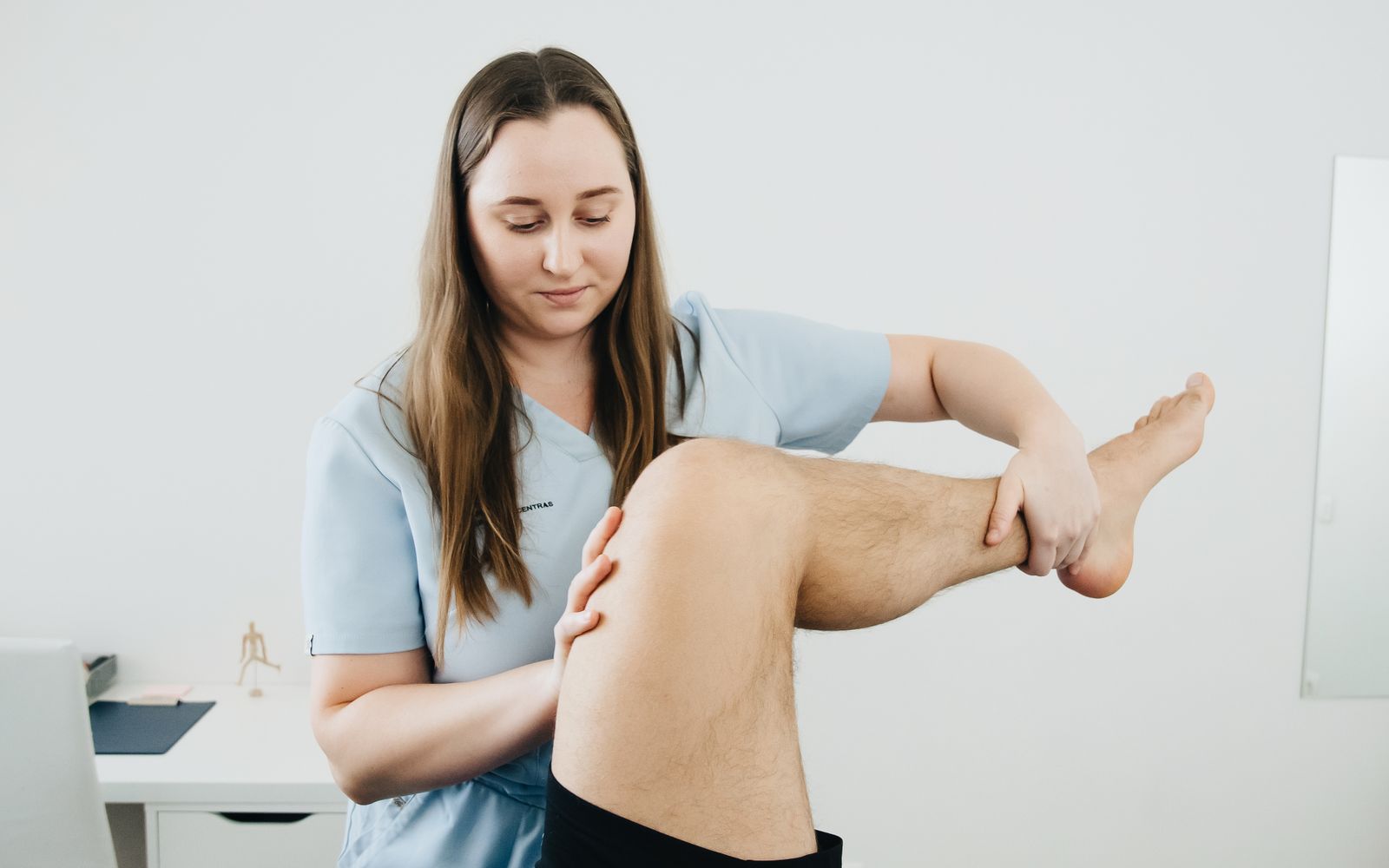
Photo by Funkcinės Terapijos Centras on Pexels
Total knee replacement is one of the most successful operations in modern medicine. But the surgery is only half of the result — the other half is the work you do afterward, and much of it happens in the first six weeks.
Every surgeon has their own protocol, and your therapist will follow it. What follows is a general picture of what to expect.
Weeks 1–2: motion and swelling
The early priorities are simple to describe and hard to do: get the knee moving, get the swelling down, and get walking safely.
- Bending (flexion) and straightening (extension) are both important. A knee that won't fully straighten makes walking awkward; one that won't bend makes stairs and getting out of a chair difficult.
- Swelling control — elevation, ice as directed, and gentle movement — makes everything else easier.
- Walking with a walker or cane, progressing as your strength and balance allow.
Discomfort is normal. Your therapist will help you tell the difference between the expected soreness of progress and pain that signals you should back off.
Weeks 3–4: building strength
As motion improves, the focus shifts to the muscles around the knee — especially the quadriceps, which tend to weaken after surgery. Expect more standing exercises, step-ups, and work on walking with a more natural pattern. Many people progress from a walker to a cane, or to no device, in this window.
Weeks 5–6: getting back to life
By now, the work looks more like daily life: stairs without holding on so tightly, longer walks, getting in and out of a car, and for many people, returning to driving once cleared by their surgeon.
Range of motion gained in the early weeks is far easier to keep than to win back later. That's why consistency in this period matters so much.
Why home makes sense after a joint replacement
In the early weeks, getting to an outpatient clinic can be the hardest part of the day: the car transfer, the parking lot, the waiting room. Home visits remove that, and let your therapist work on the exact stairs, bed and bathroom you'll be navigating.
When to call your surgeon
Contact your surgical team promptly if you notice increasing redness, warmth or drainage at the incision, fever, calf pain or swelling, or sudden shortness of breath — the latter warrants calling 911.
If you have a knee replacement on the calendar, you can request home PT ahead of time so your first visit lines up with your discharge.
This article is general information, not medical advice. Always follow your surgeon's specific instructions.